

In November, it's not uncommon for the first frost to make its appearance. Leaves fall from the trees, temperatures have dropped, and winter is lurking around the corner. It's time to make things cozy indoors and check off the last garden tasks. Dahlias can be lifted, and our garden birds could use some help too.
Garden tasks for the month of November
It's clear that during the winter months, there's noticeably less blooming than during the warm summer months. Fortunately, we can make it cozy indoors with an Amaryllis. If you plant the bulb now, it will bloom during the holidays. A lovely splash of color during the dark days. Use a narrow and tall pot to plant the bulb and water sparingly. A light and warm spot will do the rest.
November is the perfect time to plant flower bulbs in the garden. The ground has cooled, giving tulip fire little chance to strike. So feel free to plant tulips, daffodils, and other flower bulbs throughout the month. If there's a hard frost, wait a day.
The cut flower season with annuals has unfortunately ended after the first frost, but the vegetable garden is still doing its best. Depending on when you sowed or planted the varieties, you can still harvest red cabbage, parsnip, lamb's lettuce, beetroot, and spinach.
Once all the leaves have fallen from the tree, it's time to plant trees in the garden. Even for small gardens, there's a suitable specimen to be found.
The most well-known month for planting garlic is October, but you can still plant garlic cloves in the ground in November. Plant them about 10 centimeters deep and keep 10 centimeters apart.


Pruning in the month of November
Not every plant or tree can just be pruned in the garden now. Be sure to consider the plant to avoid causing damage.
- When there are no more leaves on the branches, fruit trees can be pruned.
- Do you have pollarded trees, like a willow or poplar? These trees can also be pollarded and pruned from November.
- Espalier trees can be pruned now.
For other garden plants, the pruning shears can stay put for a while. Some plants have a beautiful winter silhouette or suffer damage from pruning too early.
- Where once a thorough autumn clean-up was the norm, perennials can now comfortably remain until spring. Many plants have a winter silhouette, making them a true asset to the garden and its inhabitants. Insects can hide, and garden birds feast on the seed pods.
- Hedges prefer not to be pruned in the colder months. Frost can cause damage to the branches.
- Some trees, like walnut trees, bleed very quickly when pruned. Because they lose essential sap, the trees can weaken.
Learn more thanks to our videos
Did you know we also have a well-stocked YouTube channel? With more than 450 videos, we have a vast database of information. Be sure to take a look on YouTube and subscribe to stay updated on the latest videos.
In this video, Angelo teaches you everything about harvesting dahlia tubers. How do you best harvest the tuber and store them to survive the winter?
Give garden birds a helping hand
The cold winter months can make it difficult for garden birds to find food and water. Provide a spot where birds can eat undisturbed, allowing them to store the much-needed energy for the winter months. Also, ensure a place with clean drinking water. Keep an eye on the temperatures to prevent the water from freezing. Feeding garden birds has multiple benefits. You help the birds, but you also maintain a good balance in the garden. Birds will know their way to your garden, where they will eat slugs and other pests in spring. In the long term, you contribute to an ecological balance in the garden.
Harvesting and digging up dahlias
Dahlias are true autumn bloomers, often continuing well into November. However, once the first frost arrives, they turn brown and are ready to be dug up. The soil type determines whether you need to dig up the dahlias in the garden. Do you have sandy soil? Then you can let the dahlias overwinter in the garden, but only if you cover them well with a thick layer of mulch. We advise against this with clay soil, as moisture in the soil can freeze quickly, potentially damaging the tuber.
If you want to harvest the dahlias, it's best to cut them about 10 centimeters above the ground. Carefully dig up the tubers, preferably using a fork. A spade can cause more damage if you dig too close to the tuber.
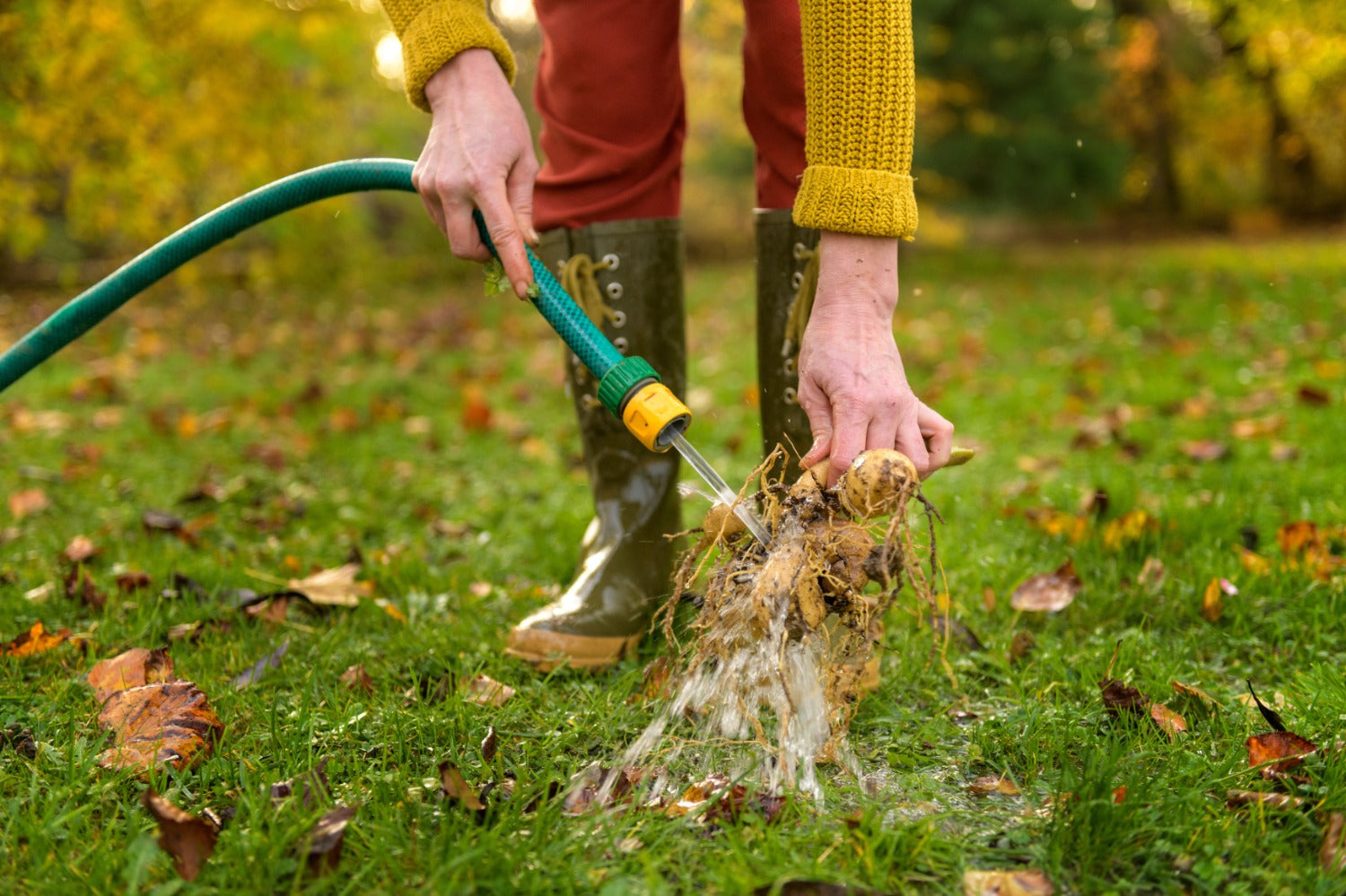
Shake the soil off the tuber and let them dry upside down for a few days in a cool, dry place. A garage, garden shed, or even a greenhouse is ideal for this. You don't need to wash away all the soil, but ensure all parts of the tuber can dry well. A brush is a handy tool to sweep away the soil without using water, thus avoiding potential rot during storage.


Make sure each tuber gets a label with the correct species name. This way, in spring, you can perfectly see which varieties you have in your collection. Store tubers in a cool, frost-free place. Ensure the area is well-ventilated to prevent mold and rot. It's best to wrap the tubers in newspaper and then store them in crates or a sturdy cardboard box. Make sure the box has holes to create good air circulation. Occasionally check the tubers for mold or rotten spots. If you unfortunately notice damage, remove the tuber immediately to prevent infecting others.


